
Cut into the golden cliffs of Deir el-Bahari on Luxor’s West Bank, the Temple of Hatshepsut looks almost modern at first sight: three broad terraces, long colonnades and ramps rising towards the mountain. It was built for Hatshepsut, one of the very few women to rule Egypt as pharaoh, during the 18th Dynasty. Here is what to see, how to plan your visit and how to fit it into a wider trip to Luxor.
Who Was Hatshepsut?
Hatshepsut ruled for around two decades in the 15th century BC, first as regent for the young Thutmose III and then as king in her own right. Her reign was peaceful and prosperous, remembered for trade missions and ambitious building projects. After her death, many of her images were defaced, which makes the surviving reliefs all the more remarkable.
What to See at the Temple of Hatshepsut
The three terraces
The temple is designed as a series of rising levels connected by ramps. Walk up slowly and look back from each level: the symmetry of the colonnades against the cliff face is the view that made the temple famous.
The Punt expedition reliefs
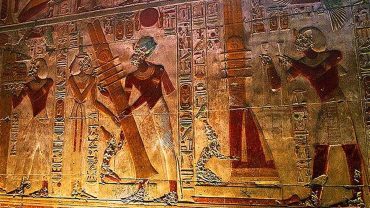
On the middle terrace, carved scenes record an expedition to the Land of Punt, with ships, incense trees and exotic animals. They are among the most detailed records of ancient Egyptian trade.
The divine birth colonnade
Nearby reliefs tell the story of Hatshepsut’s divine birth, presenting her as the daughter of the god Amun. This was a carefully crafted message that supported her right to rule.
The chapels of Hathor and Anubis
Look for the Hathor chapel, with its columns topped by the cow-eared goddess, and the Anubis chapel, where some of the original colours have survived.
Tips for Visiting the Temple of Hatshepsut
- Go early: the temple faces east and there is little shade. Morning light is softer for photos and the heat is easier to bear.
- Bring a guide: an Egyptologist brings the reliefs to life and points out details you would otherwise miss.
- Wear good shoes: the ramps and courtyards are open and sunny, so bring a hat and water too.
- Allow about one to two hours to explore all three terraces at a comfortable pace.
Combine It with the Rest of the West Bank
The temple sits within ancient Thebes, a UNESCO World Heritage Site. Most visitors pair it with the Valley of the Kings, just behind the same mountain, and a photo stop at the Colossi of Memnon. For a view of the whole West Bank at sunrise, book a hot air balloon flight over Luxor.
Tours That Include the Temple of Hatshepsut
The temple is part of the West Bank sightseeing day on our Nile cruise holidays, including the 8-day Cairo & Nile Cruise, the Hurghada & Nile Cruise week and the 11-day Egypt Classic Tour. Tell us your dates and we will plan the rest.
Comment (0)